
Make Space for Girls focuses on the needs of teenage girls because they are one of the groups most often overlooked in the design of parks and public spaces. However, this is not about creating spaces exclusively for girls.
Many of the changes teenage girls suggest for parks to make them feel more welcoming also benefit non-binary and gender diverse young people and the wider community. Creating parks that work better for teenage girls is often a route to creating parks that work better for more people.
The information on this page is designed as a starting point for councils, planners, landscape architects, developers, park managers, public health teams and community organisations who want to better understand the issue and explore practical ways to create more welcoming parks and public spaces.
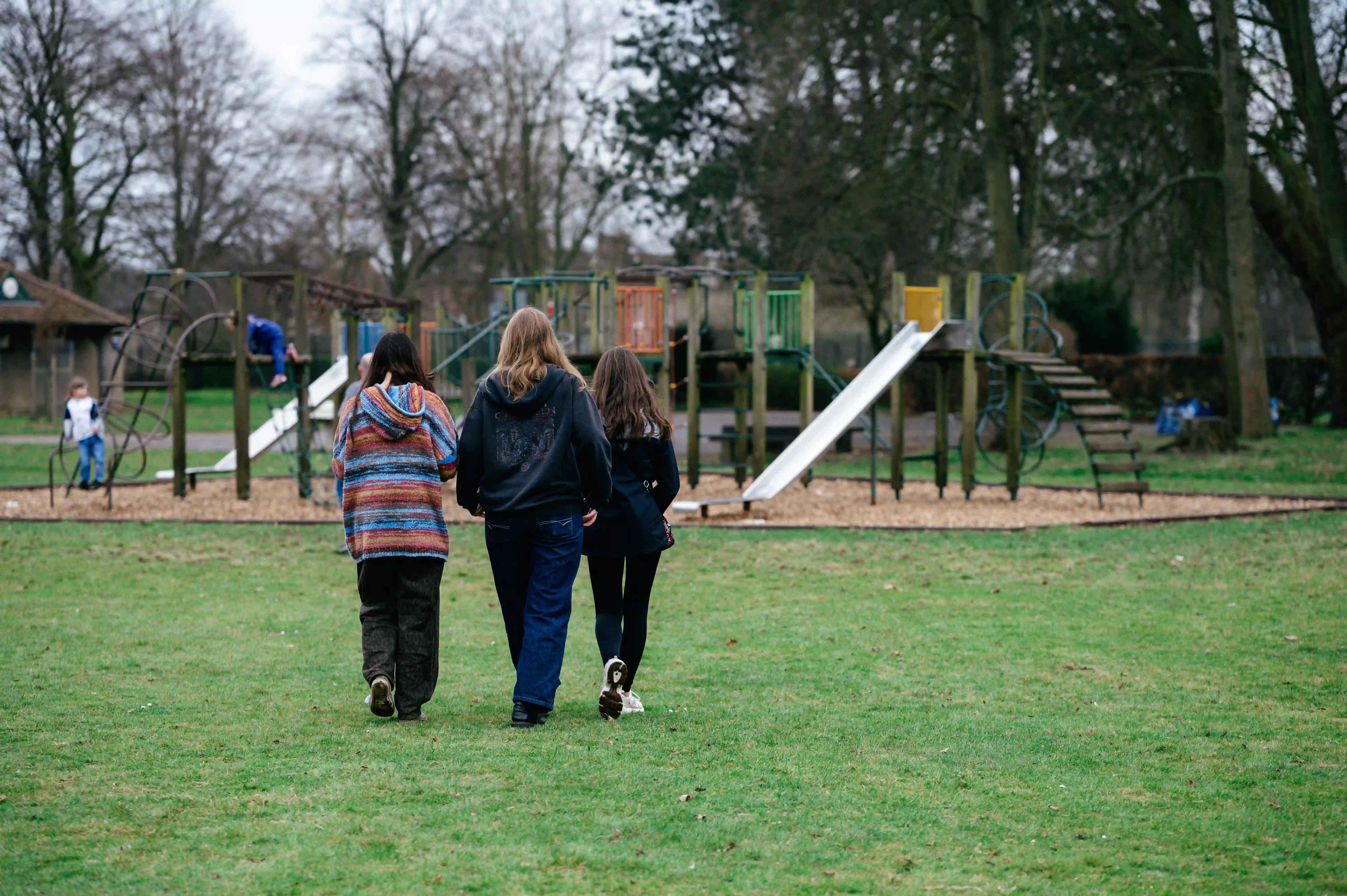
"I don't feel welcome in the play park. Parents think you are too old to be there, but there is no where else to go."
""The sports areas are full of boys and I don't feel like I'm welcome there or should be there. I want somewhere to chat and swing with my friends."
"No one has asked what we want. They probably just ask those already in parks, not those who aren't using parks."
Sources- Parkwatch Report (Make Space for Girls), Make Space for Us (Women in Sport & Yorkshire Sport Foundation), Safer Parks: Improving Acess for Women and Girls (Safer Parks Consortium).
1. Talk to girls
Teenage girls are experts in their own lives. Meaningful engagement should be the starting point for any review of parks and public spaces.
2. Look at who is using spaces
Don't just count facilities. Observe who is using them and who isn't.
3. Think beyond sport
Sports facilities matter. But many girls also want opportunities for socialising, hanging out, swinging, climbing, relaxing and informal activity.
4. Consider safety differently
Safety isn't just about crime statistics. It includes visibility, belonging, comfort and confidence.
5. Start small
Better seating, lighting, signage, planting, swings and activation activities can all make a difference
We hope this video helps you understand the issue and start conversations that could lead to change. This all begins asking the right questions, reviewing local provision, and exploring what would make parks more welcoming for teenage girls.
Please complete the feedback form below as it will help us understand the impact of the video, help us plan future resources and understand what good practice is already happening out there - and what is still to come.
This film was the result of working with a group of teenage girls from across the UK to bring a range of views and experiences together. The engagement and video project was funded by ROSA - Voices from the Frontline and one of the most useful ways we can show the impact of the funding is through your feedback.
Below the feedback form are some links to some resources that are a starting point for those wanting to make a difference in their area.
CPD
Find out more about training we offer and asking us to speak at your events.
Learn More