
Make Space for Girls focuses on the needs of teenage girls because they are one of the groups most often overlooked in the design of parks and public spaces. However, this is not about creating spaces exclusively for girls.
Many of the changes teenage girls suggest to make parks feel more welcoming also benefit non-binary and gender diverse young people and the wider community.
We made this video and created this page because we know many councils want to make change. But resources are scarce. Make Space for Girls can’t work with every council in the country one-to-one; and councils don’t have lots of resources to support park projects internally or via consultants.
The information on this page is designed as a springboard for councils who want to work with their local communities to make their parks more inclusive of more teenagers.
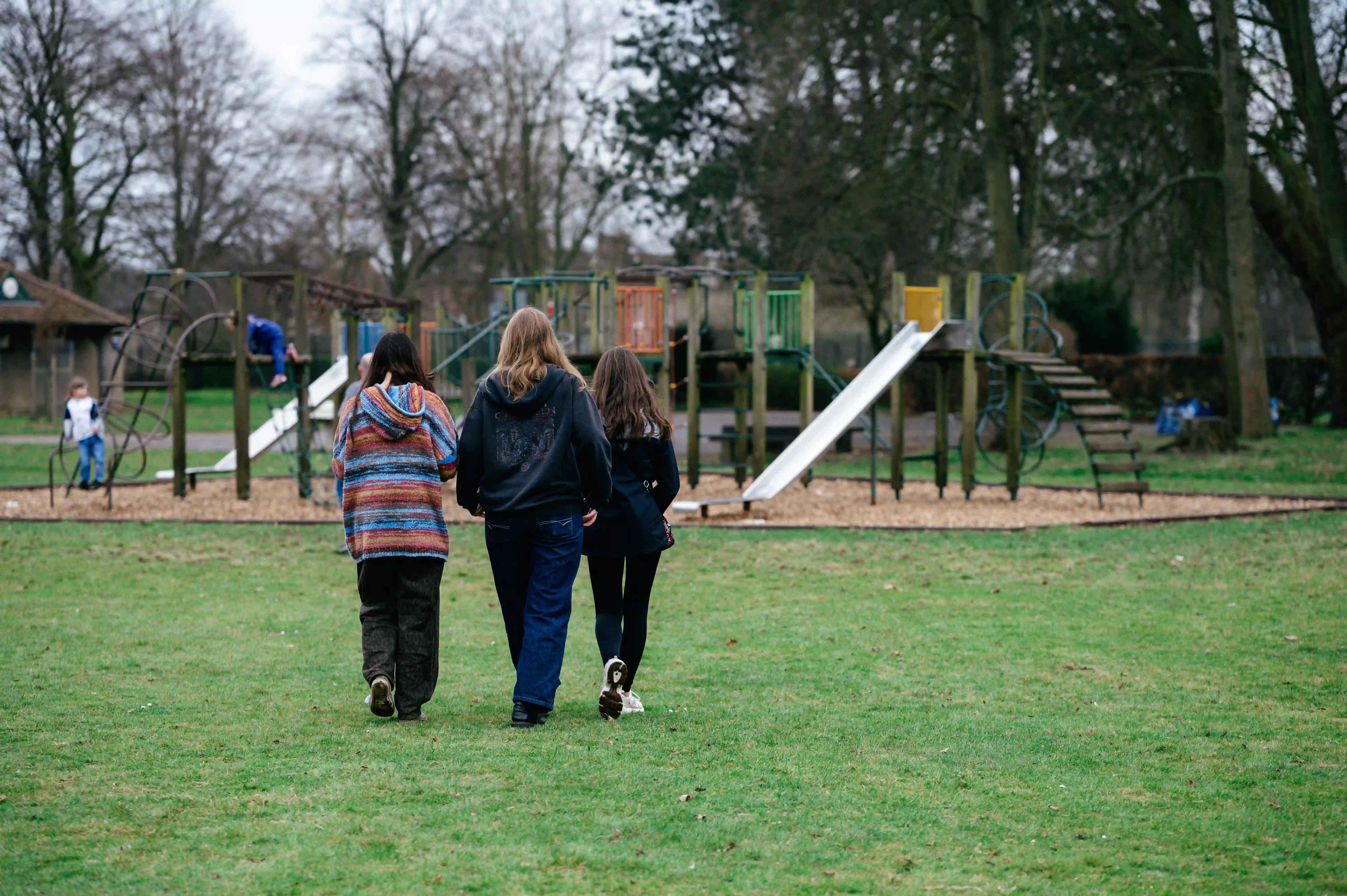
"I don't feel welcome in the play park. Parents think you are too old to be there, but there is no where else to go."
""The sports areas are full of boys and I don't feel like I'm welcome there or should be there. I want somewhere to chat and swing with my friends."
"No one has asked what we want. They probably just ask those already in parks, not those who aren't using parks."
Comments made by teenage girls in engagement sessions with Make Space for Girls in the preparation of this video campaign.
Sources: Parkwatch Report (Make Space for Girls), Make Space for Us (Women in Sport & Yorkshire Sport Foundation), Young Researchers in Residence 2023; LSE and Make Space for Girls
1. Be led by the data
Skateparks and MUGAs are dominated by boys and young men. What other teen provision do you have? Where do teenage girls hang out in your area?
2. Think play, not sport
Sport is important for teenagers, but so is play. Too often play provision looks at the under 12s, but teens need to be given spaces for their play too.
3. Consider safety differently
Safety isn't just about crime statistics. It includes visibility, belonging, comfort and confidence.
4. Be prepared to be different
Providing more of what you already have in terms of teen provision is unlikely to lead to greater inclusion.
5. Listen to teenage girls
This is easier said than done, and resources are scarce. But it doesn’t have to be overly-complicated. We have an outline of basic workshops on this page. And perhaps start by sharing this video at a local school and get some feedback.
6. Small change is still change
Better seating, lighting, signage, planting, swings and activation activities can all make a difference.
We hope this video helps you understand the issue and start conversations that could lead to change. This all begins asking the right questions, reviewing local provision, and exploring what would make parks more welcoming for teenage girls.
Please complete this feedback form, which will help us to understand the impact of the film, help us to plan future resources and understand what good practice is already happening out there - and what is still to come.
This film was the result of working with a group of teenage girls from across the UK to bring together a range of views and experiences. The engagement and film project was funded by a grant from ROSA’s Voices from the Frontline Fund, and one of the most useful ways we can show the impact of the funding is through your feedback.
We are producing bespoke resources to support councils who want to make their parks more inclusive for more teenagers, so please watch this space.
In the meantime, have a look at our guidance on ‘Making Space in Chelmsford and Maldon’” which can be viewed here.
CPD
Find out more about training we offer and asking us to speak at your events.
Find out more
